
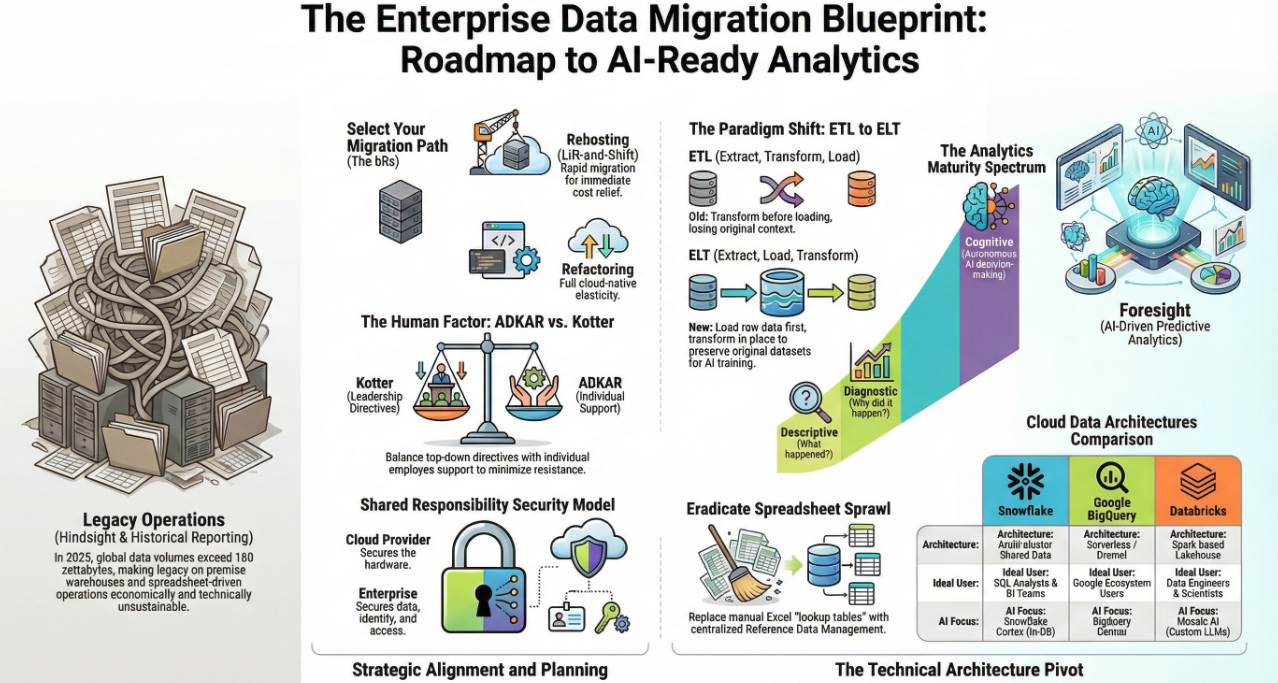
In the relentlessly competitive UK digital landscape of 2026, many mid-market leaders find themselves at a crossroads. For decades, the humble spreadsheet has been the primary instrument for business logic, offering unmatched flexibility and a low barrier to entry. However, as growing companies encounter the complexities of the modern era, characterised by massive data volumes and the need for real-time insights, relying on disconnected soreadhseet files has transformed from a convenience into a significant systemic risk.
For the growing company, the transition from spreadsheets to an analytics platform is not merely a technical upgrade; it is a comprehensive business transformation. This guide provides a structured upgrade from spreadsheets, acknowledging your current state without judgement while providing a clear path toward a mid-market analytics ecosystem.
The Capability Gap: Why Spreadsheets Hit the Wall
The reliance on spreadsheets creates a "hidden tax" that often remains invisible until a critical failure occurs. As UK SMEs scale, three critical flaws usually emerge:
The Spectrum of Intelligence: A Maturity Journey
To successfully move from spreadsheets to predictive analytics, organisations should view their progress through a structured maturity model:
A Phased Migration Approach
The move to analytics for growing companies should never be a "Big Bang" event, which carries high risk and significant downtime. Instead, follow this phased roadmap:
Phase 1: Data Anthropology and Assessment
The first step is a thorough audit of your "spreadsheet estate". This involves "data anthropology"; interviewing team members to uncover undocumented manual steps, business rules and workarounds hidden within complex macros. You must identify which spreadsheets, if they broke tomorrow, would cause the most pain.
Phase 2: Building the Modern Data Foundation
Modern analytics relies on the "Separation of Storage and Compute," allowing you to scale data storage independently of processing power.
Ensuring Trust Through Data Governance
A transition to enterprise analytics will only succeed if your staff trust the data. Effective governance is not just an IT concern but a business imperative. It requires:
Managing Change
Beyond the technical implementation, successful migration requires a holistic alignment of the entire organisation. Using an approach such as the 'McKinsey 7S Model' as a diagnostic lens, business leaders must recognise that an analytics platform is simply a new system which will only succeed if it is harmonised with the other six elements. For instance, your data Strategy must be anchored in specific business outcomes to ensure the migration delivers measurable value rather than just moving existing chaos to another hosting platform. This shift often requires adjusting your organisational Structure; perhaps moving from a central IT bottleneck toward a "data mesh" with federated ownership, while simultaneously investing in Skills, as research shows 55% of users lack confidence in BI tools without proper training. Ultimately, to move from a "rearview mirror" posture to true foresight, the upgrade must be embedded within the company’s Shared Values, transforming the overarching culture into one that prioritises data integrity and collective trust over disconnected spreadsheet logic.
The Path Forward: From Dashboards to Dialogue
The ultimate goal of this upgrade path is to move from static reports to decision-centric intelligence. In 2026, the integration of Natural Language Query (NLQ) tools allows business leaders to "talk to their data," asking questions like "Which region underperformed last quarter and why?" and receiving answers in seconds rather than days. By unifying your reporting with algorithmic foresight, you empower every decision-maker to operate with the future in mind, turning your data into a true engine of strategic growth.
Sources include:
Excel’s Limitations in Modern Business and Real-World Implications, Institute of Analytics
Turning AI into ROI: what successful organisations do differently, Deloitte
7S Model, McKinsey