
The old advice was just to make more content. But with so many channels to cover today, manual production cannot keep up. Content repurposing used to mean slicing a blog post into three tweets. Now, because search is shifting toward answer engines, teams are automating how they break down and distribute assets just to keep their heads above water.
From search to synthesis: The rise of GEO
Around half of B2B buyers now start their research with chatbots instead of Google. The goal isn't ranking as a blue link anymore. You want to be the cited source when someone asks ChatGPT or Perplexity a question. To get there, your content needs to be easy for AI to parse. Adding short, 40-word answer blocks at the beginning of sections and using FAQ schema markup helps these systems extract your expertise. Sites formatting for Generative Engine Optimisation (GEO) are seeing their citation rates increase by up to 40%.
The leap to autonomous agentic workflows
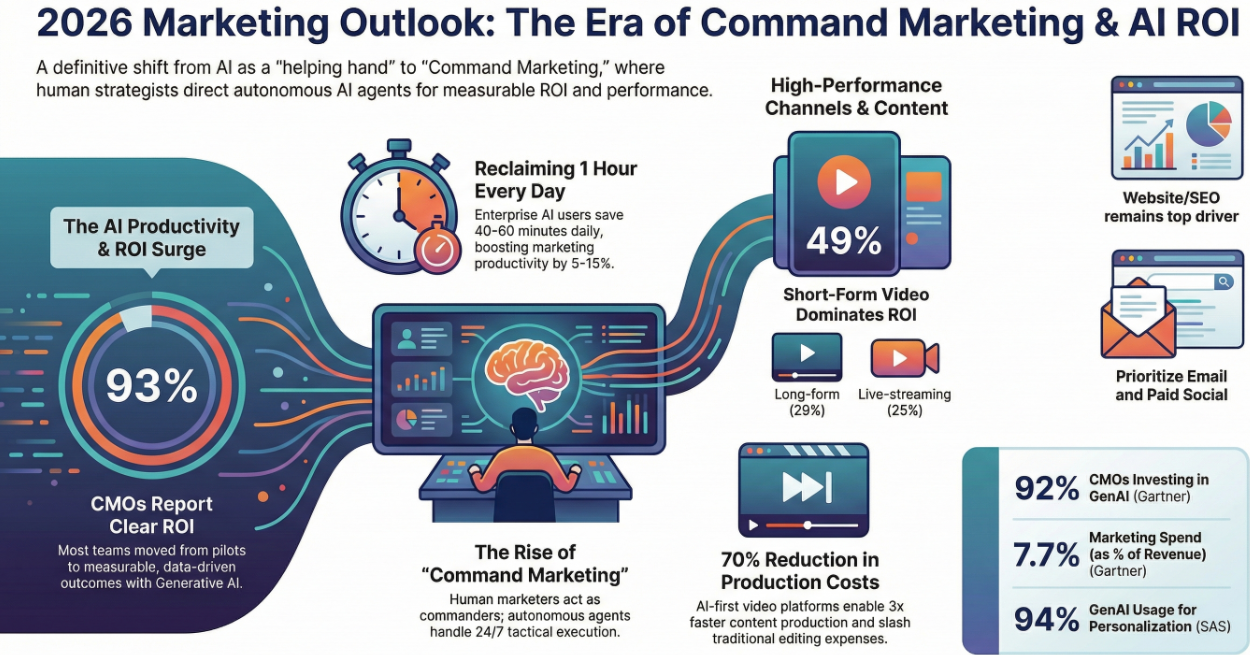
We are past the point of AI assistants needing constant prompting. Marketing teams are starting to use autonomous agents to manage the entire repurposing lifecycle. AI platforms can take a broad instruction like "increase LinkedIn engagement using this white paper" and handle the rest. They find the best formats, create images, schedule posts, and reply to comments. UK B2B teams using these workflows report higher productivity and a 20 to 30% jump in ROI.
Video dominance and long-to-short factories
Most internet users watch video every month. The bottleneck for marketing teams isn't coming up with ideas, it's the editing time. Soime AI video tools can fix this by turning a 60-minute webinar into a dozen short clips for TikTok and YouTube Shorts. They automatically reframe horizontal video to vertical, track the speaker, and insert b-roll. You get short-form content without spending hours cutting footage.
Global reach through voice cloning and localisation
Repurposing now includes translating audio into other languages. AI audio tools use voice cloning to make digital replicas of a speaker. A podcast recorded in English can be dubbed into Hindi, German, or Korean while keeping the host's original tone and pacing. This lets companies release localized content without hiring regional voice actors.
The authenticity moat and the human guardrail
AI generates about half the articles on the web right now. Because of that, real human content gets roughly five times more traffic. People still want actual lived experiences. The most practical approach is a hybrid workflow. Let AI crunch the data, change the formats, and write the first drafts. Then, have a person review it for strategy and quality. Every piece of AI content needs a human review to catch hallucinations and keep the tone from sounding like a robot.
Governance, ethics, and the legal landscape
We are also seeing strict new rules around AI this year. The EU AI Act and several US state laws require more transparency. New York's S8420A requires brands to disclose when they use synthetic performers in ads. At the same time, companies are using "human-made" labels to signal quality. You have to document your training data and follow privacy laws to avoid fines. If you just let agents run without oversight, you risk legal trouble on top of alienating your audience.
Sources include:
Journalism, media, and technology trends and predictions 2026, Reuters Institute
2026 Marketing Statistics, Trends, & Data, HubSpot
Content Marketing Statistics, Content Marketing Institute